

Why I'm Leaving
Field Study — Vietnam (ACC Fellowship)


Next month, I’m headed to Asia. Solo. At least until the chorus comes in.
I came to America with a student visa, a violin, and a red Samsonite, and I used the violin as my way in—not like most people who come to study music. I came to escape pressure to conform in my home country of Japan. What I saw in America was freedom, boldness, and a kind of happiness rooted in independence and diversity of thought.
My first twenty years here were everything I had hoped for. I got to live in what felt like a kind of utopia—New York, jazz, culture. From a small town in Japan to the biggest city in America. From a classical violinist to a jazz composer and improviser. From a born-again Christian to an atheist Jew by choice. Marriage, a child, and a condo in Manhattan that we bought with our hard-earned money. For a long time, I thought it all worked well together - all of my decisions in my life made perfect sense, created deep and beautiful harmony.
Then, over the last ten years, what used to feel like freedom—my perfectly engineered identity—became a liability. In any room defined by a single identity, my presence was a problem.
At my birthday gathering in our home—a single-family house in the Bronx, our American Dream—a longtime family friend said something I could not ignore.
Stephen, a white man from a Christian missionary family who grew up in Japan with my father, told me he was against the EB-1 pathway—the process I went through to obtain permanent residency, and later, to become a citizen, ultimately giving up my Japanese passport.
The EB-1 is an employment-based immigration category for individuals with extraordinary ability, demonstrated through sustained national or international recognition.
Stephen said he supported those who entered the country illegally, but was vehemently against this process.
Then he stood up and announced to the room how ‘beautiful’ it was to see Sam, a Black musician, playing together with white musicians, and that he is witnessing something profound.
I pulled him aside and told him that the musicians we work with are our peers and our friends, and that they respect us as musicians, not despite or because of our race.
He insisted the moment was profound, saying, “All of my Black friends are in jail.”
What he meant was that the only Black people in his life were those he encountered through prison outreach.
He was the only family friend we had in America—someone my parents trusted. But this was the end of the conversation—and the relationship.
My parents understood why I ended it. What they could not understand was his position. To them, it made no sense to oppose a legal pathway based on documented achievement while supporting those who had not followed the law.
It felt like a rejection of everything they had sacrificed—years of investment in my education and my life—and of the values they held sacred.
For years, I had already felt something changing.
The sense of utopia I once found in jazz—a space where we respected and admired one another as individuals, while acknowledging history and difference—had been fading.
Or maybe people were never that accepting. Maybe I had been naïve to think they were.
It was not only in distant spaces. It was within relationships I had trusted. I had believed we were known for who we are—our work, our lives, our choices. Instead, I saw how easily everything we had built was erased, reduced to race.
And this is why I had to leave—to be somewhere I was just a human, not a race.
I began looking for a way out—fellowships, residencies, tour grants.
Hawai‘i came first.
Through Jazz Road Tours, I performed in O‘ahu and Maui with pianist Kevin Hays.
In O‘ahu, being Asian and American was unremarkable. I looked like I belonged. English and Japanese were both around me—two languages I speak.
For once, I was just a person.
The next step is Vietnam.

Through the Asian Cultural Council Fellowship, I will spend two months conducting field study with the Jarai in the central highlands and the H’mong in the north.
There, I will look like them. But will that help, be neutral, or work against me? Will shared DNA matter at all? Will I be able to build meaningful relationships, to have conversations that connect us?
When I think of this field study in Vietnam, the outward purpose is clear: research, collaboration, and learning.
And the place itself—mountains, ocean, rice fields, unfamiliar scales and sounds, the food, the chaos of motorcycles—you cannot ignore that.
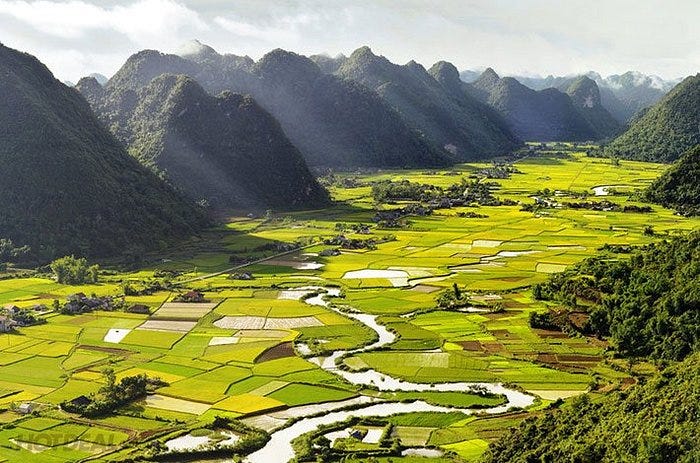
But that is not the real reason I am going.
The real reason is to put myself in a completely unfamiliar situation. I won’t understand the language. I won’t know the culture. I may look similar, but I don’t know if that will help at all. I will be entering spaces that are clearly not mine— visiting ethnic minority villages as an outsider.
Even in cities like Hanoi and Saigon, how will I be read when history is part of the context—Japan in the Second World War, America in the Vietnam War? I will go to museums, sites, and what remains.
I expect it to be uncomfortable. It needs to be. That is the only way I can grow.
I hope this trip will change me.

I will see what America feels like when I return—whether the chorus sounds different.
Good luck out there Meg.
Thanks for sharing your brutally honest story. And Vietnam sounds like a wonderful opportunity. I’m very excited hear about your experiences there and any changes that resulted.